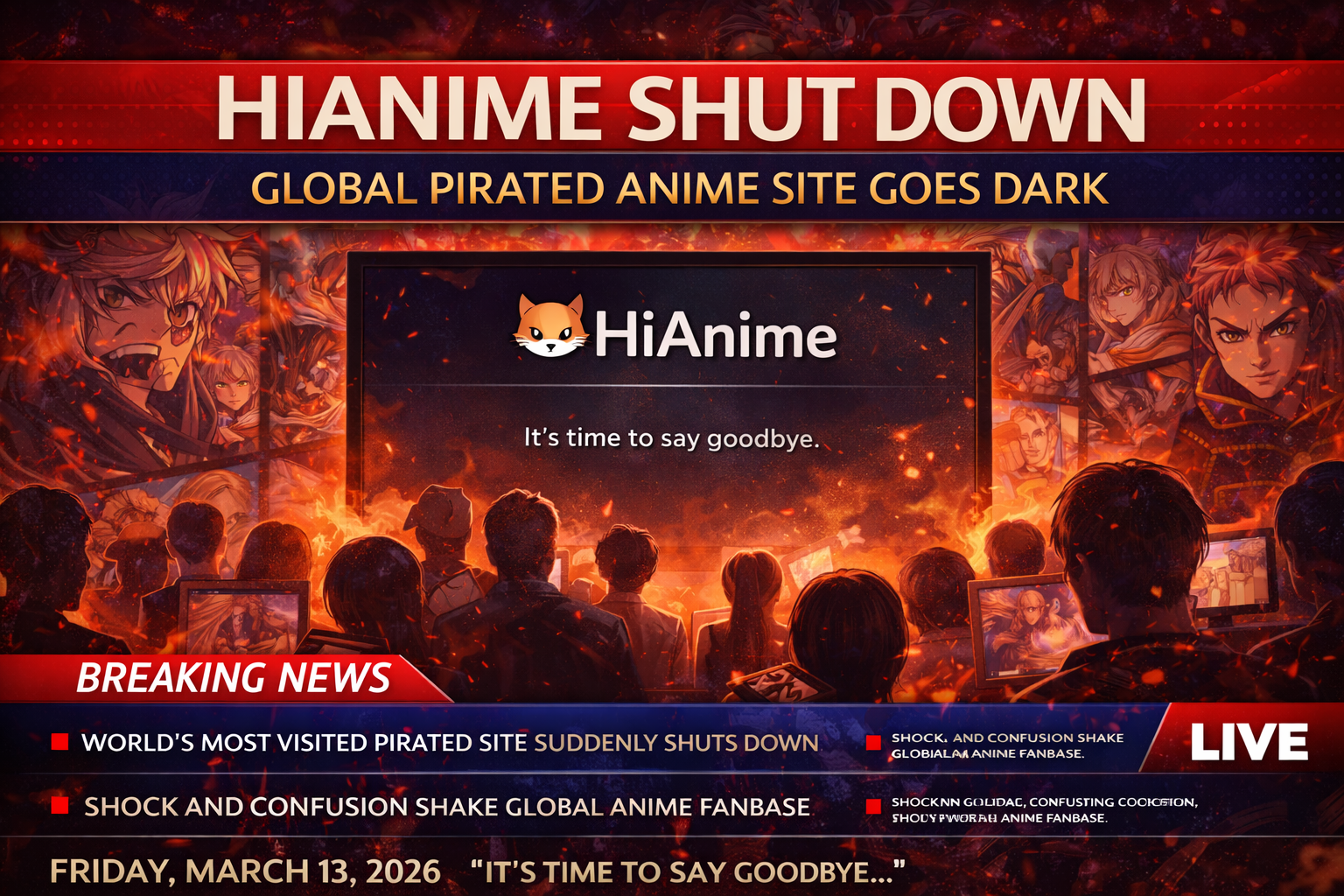
The digital landscape for anime fans shifted dramatically on Friday, March 13, 2026. HiAnime, currently the world’s most visited pirated anime streaming site, suddenly went dark. For years, the platform served as a central hub for millions of viewers. It offered a massive library that directly competed with legal giants like Crunchyroll and Netflix. Now, users attempting to access the site are met with a permanent goodbye message. The screen simply states, "It's time to say goodbye." This sudden disappearance has sent shockwaves through the global anime community.
Conflicting Reports and User Panic
While the main website displays a farewell note, the situation remains fluid. Reports from the official HiAnime Discord provide a slightly different narrative. Site moderators initially claimed the outage was due to a technical issue. They urged fans not to disseminate unverified rumors or panic. However, the timing of this "technical issue" is highly suspect. The shutdown occurred just days after the U.S. Government released its 2025 Review of Notorious Markets. This legal report listed HiAnime as a primary global threat to intellectual property for the second year in a row.
The Power of Global Anti-Piracy Alliances
This shutdown is part of an increasingly aggressive, coordinated campaign. Groups like the Alliance for Creativity and Entertainment (ACE) have intensified their efforts. Major studios, including Disney, Netflix, and Sony Pictures, have moved beyond simple takedown notices. They are now targeting the hosting infrastructure that supports these platforms. In late 2025, a landmark global injunction was issued by the Delhi High Court. This allowed authorities to block not just primary sites, but all mirror and replacement domains simultaneously. This "hydra-style" legal strategy is designed to prevent sites from simply rebranding and relaunching.
Aggressive Moves from Japanese Publishers
Japanese content creators are no longer staying on the sidelines. The Content Overseas Distribution Association (CODA) has been leading international raids. Their recent "Operation Anime 2" targeted piracy networks across South America. This led to the closure of over 16 major piracy sites in Brazil alone. These publishers argue that piracy steals revenue directly from animators and storyboard artists. By dismantling the servers located in countries like Vietnam and Brazil, they are making it nearly impossible for sites like HiAnime to stay online.
The Role of "Piracy-as-a-Service" Platforms
Authorities are also cracking down on "Piracy-as-a-Service" (PaaS) networks. These are backend libraries like VidSrc that provide the actual video files for hundreds of front-end sites. In early 2026, many of these hosting providers were forced to migrate to Russian servers to avoid seizure. However, even these safe havens are becoming less secure. When a hosting giant falls, it causes a domino effect that takes down dozens of smaller anime sites at once. HiAnime appears to be the latest and largest victim of this infrastructure-level warfare.
Why Fans Still Flit to Pirated Sites
Despite the high risks, the demand for illegal streaming remains massive. Many fans point to regional licensing restrictions as the main driver. Large portions of popular series are often unavailable legally in certain parts of the world. Others complain about subscription fatigue. To watch every seasonal hit, a viewer might need five different paid services. Piracy sites offer a centralized, user-friendly experience that legal platforms have struggled to replicate. Until legal services provide a more affordable and unified global library, the demand for sites like HiAnime will persist.
The Future of the Anime Industry
The fall of HiAnime represents a major victory for copyright enforcement. It signals that the era of "permanent" pirate giants is likely over. Authorities are now utilizing real-time domain blocking and financial tracking to shorten the lifespan of these websites. While history suggests new sites will eventually emerge, the barrier to entry is becoming much higher. The industry is moving toward a future of rigorous enforcement and limited alternatives. For fans, this may finally force a transition toward legal streaming as the "cat and mouse" game becomes too difficult to sustain.